You’re staring down $20,000 in credit card debt, the calls won’t stop, and someone just told you to "get a debt settlement lawyer." Sounds smart, but is it actually necessary, or just another expense piled on top of what you already owe? A lawyer debt settlement arrangement can protect you when creditors threaten lawsuits or when the numbers involved are large enough that a mistake costs real money.
Here’s the direct answer: you don’t always need one. Plenty of people settle credit card debt on their own or through a nonprofit debt management plan without ever hiring an attorney. But there are specific situations, like active lawsuits, wage garnishment threats, or debts stretching into six figures, where a credit card debt lawyer earns their fee many times over by negotiating harder and protecting your legal rights.
This article breaks down exactly when hiring a lawyer for debt settlement makes sense, what it actually costs, how these attorneys negotiate with creditors, and the red flags that separate a legitimate debt attorney from a settlement scam dressed up in a suit.
Why you might need a debt settlement lawyer
Most credit card debt gets settled without a courtroom in sight, and plenty of people resolve it with basic credit card help instead. But certain warning signs mean you should stop negotiating alone and call an attorney. Here’s when the switch matters most.
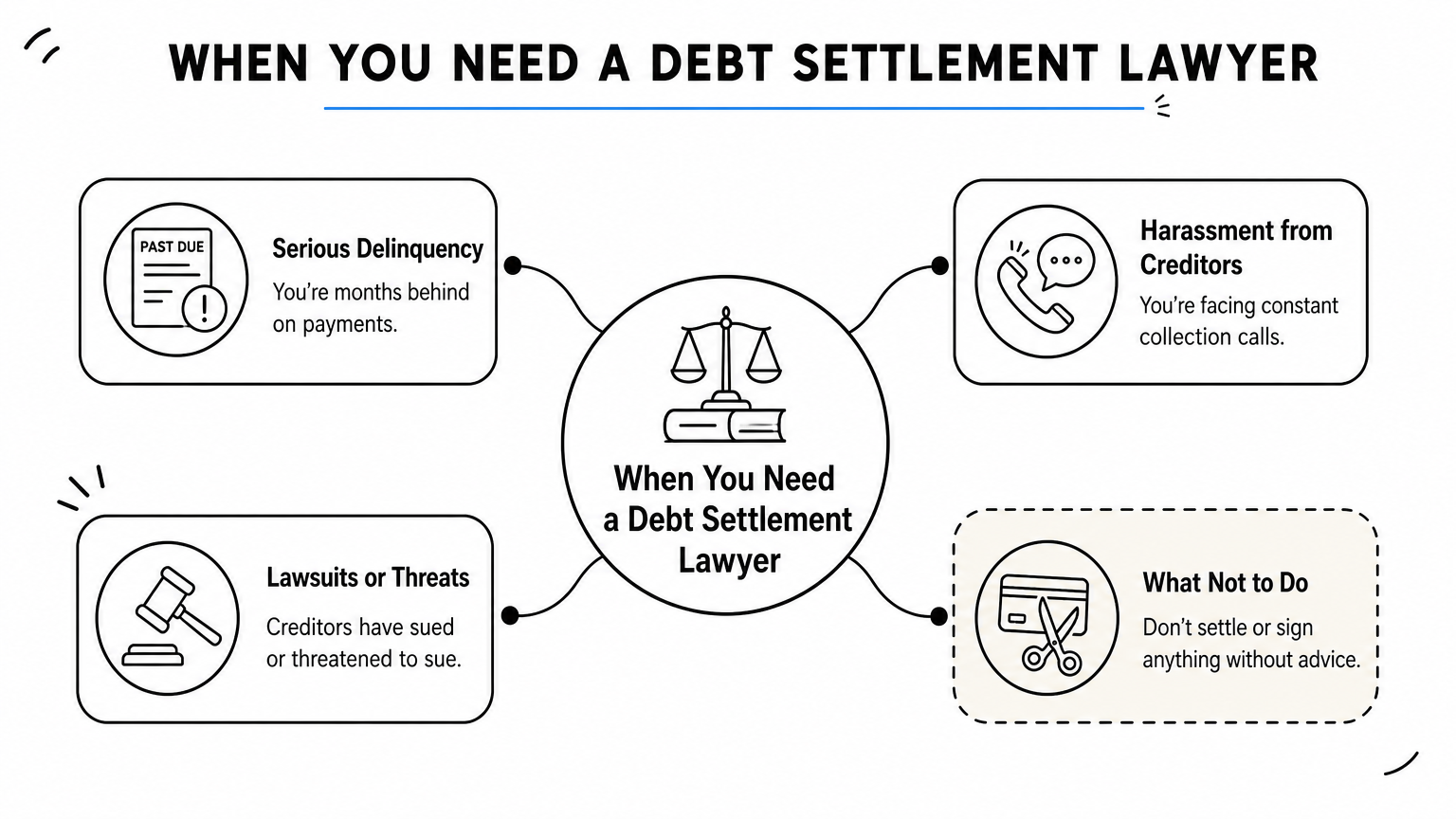
You’ve already been sued or served with papers
Getting a summons in the mail changes everything. Once a creditor files a lawsuit, you’re on a legal clock, usually 20 to 30 days depending on your state, to respond or risk a default judgment. A debt settlement lawyer knows how to file an answer, raise defenses like the statute of limitations, and often negotiate a settlement before the case ever reaches trial. Ignore that summons and you could end up with a judgment that leads to wage garnishment or a bank levy, both of which are far harder to undo after the fact.
If you’re already served with a lawsuit, a lawyer isn’t a luxury, it’s damage control.
Your debt load is large or spread across multiple creditors
Settling $3,000 owed to one card issuer is straightforward enough to handle yourself. Settling $80,000 spread across seven creditors, some of whom have already sold your debt to collection agencies, is a different animal. A lawyer for debt settlement can coordinate negotiations across every account, prioritize which creditors pose the biggest legal risk, and structure a payoff plan that doesn’t leave you exposed to a lawsuit from whichever creditor gets impatient first. This kind of coordination is where attorneys genuinely earn their fee, since debt settlement companies typically negotiate one account at a time with no legal authority to back up the offer.
You’re facing wage garnishment or an account levy
Once a creditor has a judgment, they can move to garnish your paycheck or freeze your bank account, depending on your state’s rules. An attorney can sometimes negotiate a settlement even at this late stage, or file exemptions that protect a portion of your income under state and federal law. The Consumer Financial Protection Bureau notes that debt collectors must follow strict rules under the Fair Debt Collection Practices Act, and a lawyer knows exactly which of those rules apply to your specific situation.
You suspect the debt is invalid, time-barred, or being handled by a scammer
Old debt sold to third-party collectors sometimes carries wrong balances, missing documentation, or has passed the statute of limitations in your state, meaning it’s no longer legally collectible through a lawsuit. Proving that requires legal knowledge most consumers don’t have. Likewise, if you’re being pressured by a debt settlement outfit that’s demanding upfront fees before doing any work, that’s illegal under FTC rules for telemarketed debt relief services, and a lawyer can help you spot the scam before you lose money.
You want someone with actual legal leverage
Here’s the practical difference: a debt settlement company sends letters and makes calls, but a licensed attorney can threaten litigation, file counterclaims, and represent you in court if talks break down. That leverage alone often gets creditors to the table faster and with better offers than a non-attorney negotiator can secure.
How to find and vet a qualified debt settlement lawyer
Finding a real attorney takes more digging than typing "debt settlement lawyer near me" into a search bar. The debt relief industry attracts scammers who slap "law firm" on their name without a single licensed attorney on staff. You need to verify credentials before you hand over a retainer.

Start with your state bar association
Every state maintains a public directory where you can confirm an attorney is licensed and in good standing. Search the lawyer’s name, check for disciplinary history, and confirm their practice area actually includes consumer debt or bankruptcy law, not just a generic listing. A legitimate debt settlement lawyer will have this information easily verifiable and won’t dodge the question if you ask directly.
Ask the right questions during a consultation
Most consumer attorneys offer a free or low-cost initial consultation. Use it to screen them properly:
- How many debt settlement cases have you handled in the past year?
- Do you charge flat fees, hourly rates, or a percentage of debt reduced?
- Will you personally negotiate with creditors, or does staff handle that?
- What happens if a creditor refuses to settle and sues me?
- Can you provide references from past clients?
A qualified lawyer answers these questions without hesitation; a scammer changes the subject.
Watch for red flags that signal a scam
Certain warning signs should send you running. Upfront fees before any work is done, guarantees of a specific settlement percentage, and pressure to stop paying your creditors immediately are all classic tactics used by fraudulent operations, the same playbook behind the typical consolidation scam. The Federal Trade Commission warns that legitimate debt relief providers can’t collect fees until they’ve actually settled or reduced your debt as promised.
Confirm they’ll communicate directly with you
Good attorneys keep you informed at every stage, not just when they need another payment. Before signing anything, get the fee structure in writing and ask how often you’ll receive updates on negotiations. If you’re still weighing whether legal help fits your budget, our credit card debt relief tips break down alternatives worth comparing before you commit to hiring anyone.
Debt settlement lawyer vs. debt settlement company
Both options aim to shrink what you owe, but the legal standing behind them couldn’t be more different. A company offering credit card debt settlement is typically a for-profit business staffed by negotiators who are not licensed attorneys. They can call creditors and propose lump-sum payoffs, but they have zero authority to represent you in court and no legal protection if a creditor decides to sue instead of negotiate. A debt settlement lawyer, by contrast, is a licensed professional bound by state bar ethics rules, capable of filing legal documents, and able to step into a courtroom the moment a lawsuit lands on your doorstep.

Fee structures reveal the real difference
Look closely at how each option gets paid, because it tells you what they’re actually incentivized to do.
| Feature | Debt Settlement Company | Debt Settlement Lawyer |
|---|---|---|
| Can represent you in court | No | Yes |
| Regulated by state bar | No | Yes |
| Typical fee structure | 15-25% of enrolled debt | Flat fee, hourly, or percentage |
| Handles active lawsuits | No | Yes |
| Legal privilege on communications | No | Yes, attorney-client privilege |
The moment a lawsuit is possible, a settlement company’s toolkit runs out. A lawyer’s doesn’t.
Communication protections matter more than people realize
Speaking with a lawyer means your conversations are covered by attorney-client privilege, so anything you disclose about your finances stays confidential and can’t be subpoenaed later. Negotiators at a settlement company carry no such protection, meaning anything you say could theoretically resurface if a creditor’s attorney gets aggressive during litigation. This distinction rarely gets mentioned in marketing materials, but it matters if your situation is already contentious.
Deciding between the two often comes down to risk level. Someone with $5,000 owed to a single creditor and no lawsuit in sight probably doesn’t need an attorney’s hourly rate. Someone facing multiple lawsuits, aggressive collectors, or six-figure debt should lean toward legal representation, since the protections and leverage a licensed attorney brings simply don’t exist on the settlement company side of the table.
How much does a debt settlement lawyer cost
Cost is usually the first thing people ask about, and it’s fair, since attorney fees vary widely depending on how a lawyer structures billing and how complicated your debt situation is. A debt settlement lawyer typically charges in one of three ways: a flat fee per account settled, an hourly rate for ongoing legal work, or a percentage of the debt reduced, similar to how settlement companies bill but with legal protections attached. Knowing which model you’re agreeing to before signing anything keeps you from getting blindsided by a bill that doesn’t match what you expected.
Typical fee ranges by billing model
Pricing depends heavily on your region and the complexity of your case, but these ranges reflect what most consumers report paying.
| Fee Structure | Typical Range | Best Suited For |
|---|---|---|
| Flat fee per debt | $250-$1,500 per account | Single-creditor negotiations |
| Hourly rate | $150-$400 per hour | Active lawsuits, court appearances |
| Percentage of debt reduced | 15-25% of savings | Multi-creditor settlements |
Paying more upfront for a lawyer often costs less than losing a lawsuit you couldn’t defend alone.
Watch how fees are billed against your timeline
Questions about payment timing matter as much as the total number. Legitimate attorneys generally don’t demand full payment before doing any work, though a modest retainer to open the case is common and different from the illegal upfront fees the FTC warns against for pure settlement companies. Retainers usually range from $500 to $2,500 depending on how many creditors are involved, with the lawyer drawing down against that balance as work gets done.
Weigh cost against what’s at stake
Spending $1,000 on legal fees to protect $15,000 in disputed debt from a lawsuit judgment is a straightforward calculation once you frame it that way. Underestimating the cost of doing nothing is the more common mistake, since a default judgment can lead to years of wage garnishment that dwarfs whatever the attorney would have charged. Talk through the total projected cost during your consultation, get it in writing, and compare it directly against the size and risk level of the debt you’re trying to resolve.
When you can settle debt without a lawyer
Settling debt without an attorney works fine when the situation stays simple. If you owe money to one or two creditors, no lawsuit has been filed, and the total balance sits under $10,000, most people can handle their own credit card debt negotiation for a lump-sum settlement or a payment plan directly with the creditor’s collections department. Card issuers like Discover and Capital One have internal hardship programs specifically designed for this, and their representatives are used to fielding these calls without a lawyer on the line.
Nonprofit credit counseling agencies offer another lawyer-free path. A debt management plan through an agency accredited by the National Foundation for Credit Counseling typically lowers your interest rate and consolidates payments into one monthly bill, all without touching your legal rights or requiring a retainer. This route works best when you’re current on payments but drowning in interest, rather than already facing collection lawsuits.
If nobody’s threatening to sue you and the math is simple, you probably don’t need a lawyer to settle it.
A basic self-negotiation checklist
Before haggling with your creditors yourself, get organized. Missing a step here is usually what turns a manageable negotiation into a mistake you regret.
- Confirm the debt amount and creditor name in writing first
- Save a lump sum, even 40-50% of the balance, before you call
- Ask for any settlement in writing before sending payment
- Get the account status change (paid, settled) confirmed in writing too
- Avoid giving bank account access over the phone
Handling things yourself also saves the fees a lawyer or settlement company would charge, money that can go straight toward the settlement itself. Just remember the moment a summons arrives, or a creditor threatens legal action, that calculation flips, and it’s time to bring in professional help rather than keep negotiating solo.
Deciding what’s right for your situation
The honest answer to whether you need a debt settlement lawyer depends entirely on your circumstances, not on what a scary-sounding ad tells you. Small balances, no lawsuits, and cooperative creditors mean you can likely handle negotiations yourself or through a nonprofit agency. Lawsuits, six-figure debt, or aggressive collectors mean a lawyer for debt settlement protects you in ways a settlement company simply can’t match.
Run the math before you decide anything. Compare what a lawyer costs against what you’d lose from a default judgment, wage garnishment, or a scam settlement company that takes your money and does nothing. That comparison usually makes the right path obvious.
Whichever route fits your situation, don’t go in blind. Explore our full breakdown of debt consolidation options to compare every path available before you commit to one.